Executive Leaders
Strategic Sessions
Global Innovators
Manufacturing Leaders
The Future Factory Show Middle East returns for its landmark 5th edition in 2026 - now recognized as the region’s most influential gathering for industrial transformation, digital manufacturing, and advanced automation. Hosted in Dubai, this flagship initiative brings together the full Industry 4.0 ecosystem to accelerate the advancement of smart, sustainable, and resilient factories across the Gulf.
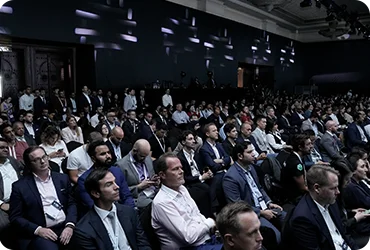
Designed exclusively for manufacturing CEOs, plant leaders, digital transformation executives, supply chain strategists, industrial city authorities, and government enablers.

Delivering a world-class platform for strategy, innovation, technology adoption, and cross-sector collaboration guided by regional visions (e.g., UAE Operation 300bn).
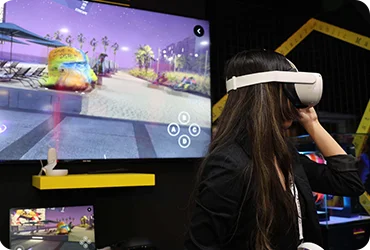
The 2026 edition introduces themes like AI-driven factory intelligence, cybersecurity resilience, autonomous supply chains, and workforce augmentation.

Built as a one-day, high-impact main stage conference, featuring real world case studies, and exclusive sponsored boardrooms and conference tracks over two days.
These interconnected domains define the strategic roadmap for industrial transformation in the GCC region.
AI & Digital Intelligence
The foundation of the Meta Factory: AI-driven Digital Twins, GenAI applications, and secure Cloud ERP for hyper-efficiency.
Automation & Robotics
Driving operational scale through advanced robotics, Cobots, AMRs, and leveraging 5G/6G industrial networks for real-time control.
Supply Chain & Logistics
Building regional resilience and total visibility using intelligent ERP systems, warehouse automation, and dynamic route optimization.
Sustainability & Resilience
Integrating ESG goals with operational reality, covering industrial cybersecurity, smart energy management, and carbon-neutral technologies.
Strategy & Workforce
Addressing the human and policy elements: government accelerators, Servitization business models, and upskilling the next generation of industrial talent.
A deep dive into the technology verticals and strategic solutions driving the Industry Next.0 transformation across the GCC region.
Vertical 01
Industrial Automation Companies, Robotics Manufacturers, Cobots, AMRs/AGVs Providers.
Vertical 02
ERP, MES, PLM, APS, MOM Software Vendors.
Vertical 03
AI for Manufacturing, Predictive Analytics Firms, Industrial ML Platform Providers.
Vertical 04
OT Cybersecurity, Zero-Trust OT, SCADA/ICS Security, Threat Detection Vendors.
Vertical 05
Cloud Hyperscalers, IoT Platforms, Edge Compute Providers.
Vertical 06
OT/IT Integration Specialists, Automation Integrators, IIoT Integrators, MES Implementers.
Vertical 07
Digital Factory Enablers, Smart Sensors, Machine Vision Firms.
Vertical 08
Warehouse Automation Companies, Smart Logistics Technology Firms.
Vertical 09
Energy Management Companies, Industrial ESG Technology Providers.
Vertical 10
PLC/DCS Vendors, Industrial PCs, IIoT Devices, Control Systems.
Vertical 11
Advanced Simulation Software, Virtual Factory Vendors.
Vertical 12
Reliability Tech Firms, CMMS Providers, APM Vendors.
Vertical 13
Additive Manufacturing Technology, Industrial 3D Printing.
Vertical 14
Industry 4.0 Consultancies, Manufacturing Advisors.
AI-powered WhatsApp networking that instantly matches the right people, schedules meetings, and swaps contacts—without downloads or learning curves.
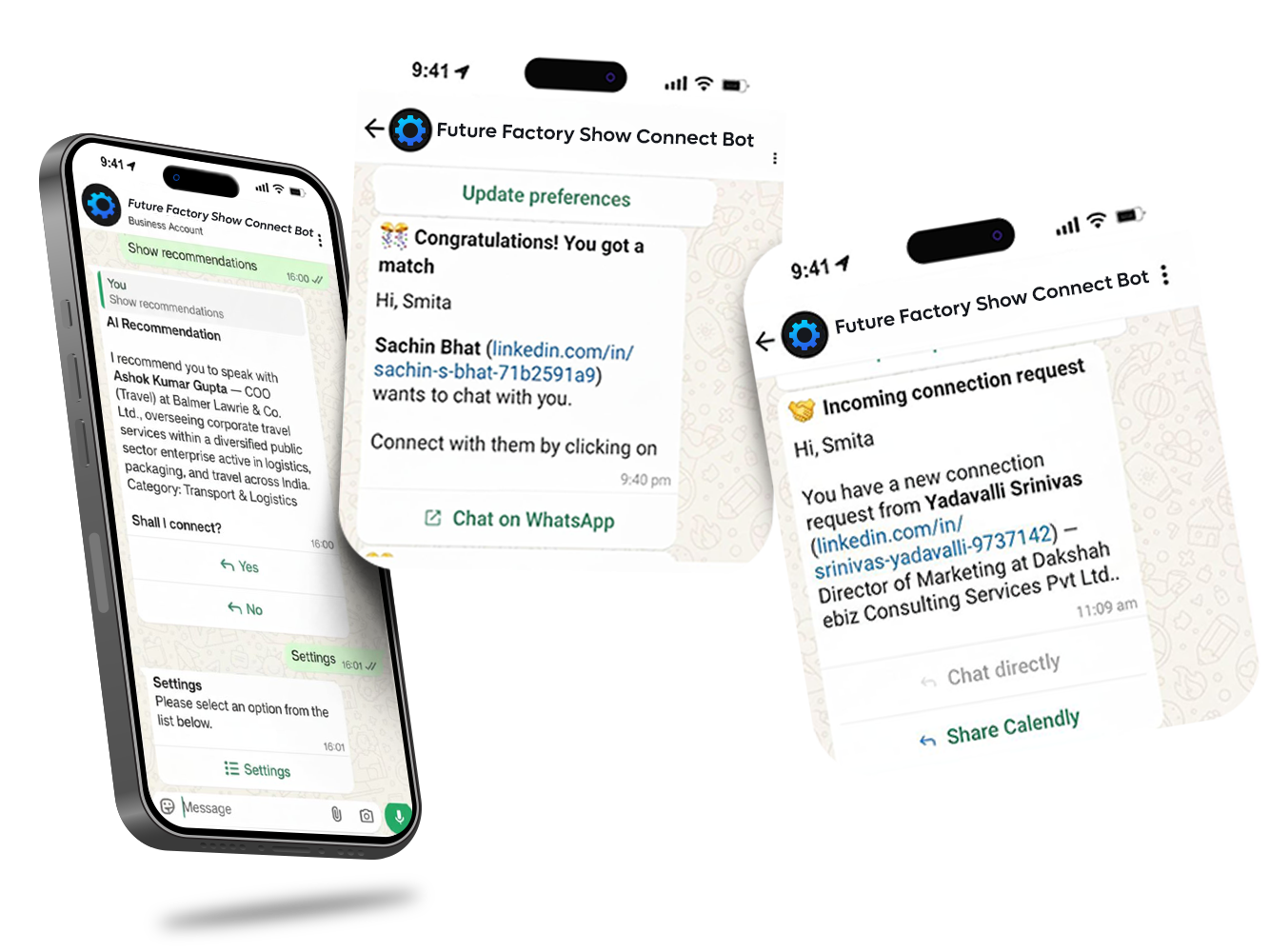
SMART MATCHMAKING: Get curated intros based on goals, interests, and industry in real-time.
ONE-TAP MEETINGS: Propose times, confirm slots, and add to calendar—directly inside WhatsApp.
FRICTIONLESS CONTACT SHARE: Scan a badge, request consent, and auto-save verified profiles.
LIVE UPDATES: Receive session alerts, room changes, and speaker drops instantly.
ON-DEMAND CONCIERGE: Ask for booths, tracks, or people; get answers and directions 24/7.
POST‑EVENT FOLLOW‑THROUGH: Auto-send summaries, exchange decks, and keep chats alive after the show.

Director of National Value Added
UAE Ministry of Industry & Advanced Technology

Chief Commercial Officer, EMEA - Manufacturing
Ge Vernova

Chief Digital Officer
CNTXT

Acting, Assistant Undersecretary for the Industrial Development Sector
Ministry of Industry & Advanced Technology

Chief Information Officer (CIO)
Ducab

Cluster Market Access Manager Gulf & North Africa
Rockwell Automation

Middle East Solutions Architect & Digital Transformation
GE Vernova
Principal Solution Engineer
Epicor

Senior DIrector Supply Chain
Henkel Consumer Brands - MEA & Central Asia

EMEA Pre-Sales Solutions Architect Leader
Ge Vernova


































Great show! Learnt how technology is shaping the future of manufacturing and improving productivity & quality through automation.

It’s been a great 2 days meeting manufacturers starting their digital transformation journey. Quality delegates and great discussions.

GE Digital Manufacturing prefers focused events like this. We received quality leads and excellent follow-up from the Convergent team.

It was a fantastic event and meeting our expectations to interact and network with the experts from multiple industries especially in the manufacturing & supply chain. The quality of the content added value to our experience, it was great opportunity to exchange knowledge with the experts. I would like to rate the event a complete 10 due to the wide stream of knowledge and thanks to the organizers. Hoping to attend the Future Factory Show attend next year.

Very well organized event and an excellent knowledge-sharing platform for manufacturing leaders.

The event brought together high-quality delegates and experts across IoT, Industry 4.0, and smart manufacturing. Insightful sessions on digital transformation and servitization stood out, complemented by seamless execution and strong Abu Dhabi government support. We look forward to future editions and the shift toward Industry 5.0

A strong first-time experience with high-quality delegates, relevant smart manufacturing topics, and meaningful government participation. The event successfully created real awareness, and we look forward to seeing it expand across the UAE and beyond.

Don’t miss out on the lowest price
Super Early Bird: US$ 99
(Ends on 19 Jan 2026)
Early Bird: US$ 149
(Ends 24 Feb 2026)
Standard: US$ 199
(25 Feb 2026 Onwards)
Access to:
Navigate the 2026 agenda by topic, speaker, or strategic pillar.
How can manufacturers transition from static models to dynamic, AI-driven Digital Twins—the "Meta Factory"—to serve as true growth catalysts for predictive optimization and process design? What is the path to achieving a unified system for simulation across engineering, production, and supply chain?
Moving beyond AI for insights, how can we successfully deploy Agentic AI systems that autonomously execute complex, multi-step tasks across integrated PLM and MES environments? What are the safety, ethical, and governance challenges associated with this level of autonomy in high-stakes operational technology (OT) settings?
Given the need for market agility, what are the most critical benefits and inherent risks of migrating core business and manufacturing execution data to secure, hyper-scaled Cloud ERP systems? How does the architecture of a cloud-native ERP transform operational scalability for multi-site and global manufacturing organizations?
How are manufacturers leveraging AI to integrate data flows between Product Lifecycle Management (PLM) and Manufacturing Execution Systems (MES) to optimize design-for-manufacturability? What is the ROI of using AI to continuously refine production recipes and routing based on real-time shop floor data?
What frameworks are thought leaders implementing to ensure that the massive influx of industrial data is effectively translated into tangible, agile, and AI-enhanced business decisions across process and discrete industries? How can this data be used to enhance regulatory compliance and transparency?
Beyond large language models, how can Generative AI tools be strategically applied in R&D to accelerate the creation of novel, structurally-optimized, and material-efficient product components? What impact does this have on accelerating time-to-market?
As the GCC invests heavily in smart manufacturing, what specific role will next-generation advanced robotics play in achieving world-class operational efficiency and enhanced production throughput in new factories? What is the strategic roadmap for fully automating the shopfloor?
How is the integration of AI and machine learning giving industrial robots advanced perception, allowing them to perform complex, high-precision tasks essential for automated quality inspection and critical assembly? What does this mean for defect rates?
What specific industrial use cases—such as real-time edge processing and autonomous mobile robots (AMRs)—will be enabled or significantly accelerated by the advent of AI-powered 5G networks and emerging 6G standards? 9What are the requirements for accelerating industrial connectivity?
What are the best practices for rapidly deploying and securing extensive Industrial IoT sensor networks to gather granular, real-time data from disparate Operational Technology (OT) assets and machinery? How can this data flow be normalized for central AI analysis?
Moving towards Industry 5.0, how should manufacturers design workplaces to prioritize the synergistic collaboration between human workers and advanced robotic systems, ensuring safety, efficiency, and job enrichment?
What are the critical technology and cultural steps required to shift maintenance strategies from reactive/scheduled models to true predictive maintenance by effectively integrating Machine Learning outputs into daily operations?
With a projected CAGR of 10-12% in this sector, what is the impact of adopting AI-driven analytics and real-time monitoring to achieve true end-to-end visibility and efficiency in the complex regional supply chains? What are the key tools being adopted?
What are the critical investment areas and long-term efficiency gains provided by deploying intelligent, autonomous mobile robots (AMRs) and other advanced robotics solutions for enhanced warehouse automation? How does this impact inventory optimization?
How are intelligent, next-generation ERP platforms being leveraged to provide dynamic, AI-informed decision support, mitigating risks and optimizing logistics, procurement, and inventory across the extended supply chain?
In the context of economic diversification and global volatility, what strategic shifts—such as sourcing diversification or increasing local/regional production—are necessary to build a truly robust and resilient industrial supply chain?
With a high projected CAGR of 18-20% for this segment, what are the current best practices for defending the critical, interconnected infrastructure of IT, OT, SCADA, and ICS layers against sophisticated industrial cyberattacks? How is this addressed in the future factory setup?
What new business models and technologies are proving most effective in embedding sustainability into the core of manufacturing operations, moving beyond compliance to achieve Smart Sustainability? How can this be leveraged for excellence?
What breakthrough process technologies, such as industrial carbon capture and utilization (CCU) or green hydrogen integration, are required for hard-to-abate industries to achieve verifiable carbon neutrality goals by 2030?
How can AI and IIoT be used for real-time monitoring and optimization of industrial power consumption, allowing facilities to become active participants in smart grids and significantly reduce utility costs?
What is the region's readiness level for implementing Digital Product Passports (DPP) to track product components and materials, and how can manufacturers turn the need for compliance into a strategic transparency advantage?
How can manufacturers implement closed-loop systems and waste-to-value initiatives to embed Circular Economy principles into their processes, minimizing raw material consumption and enhancing resource efficiency?
What strategic policies, incentives, and collaborative frameworks are government authorities and industrial cities utilizing to accelerate the adoption of Industry 4.0 and drive the projected 5-7% CAGR growth for the manufacturing sector?
What are the practical steps required for industrial companies to shift their business model from selling products to offering integrated, outcome-based services (e.g., equipment-as-a-service)? How does this reliance on predictive data change customer relationships, which industries could leverage this model today and how?
With the rapid integration of advanced technologies, what collaborative strategies between industry, government, and academia are most critical for upskilling the existing workforce and closing the talent gap for the factory of the future?